
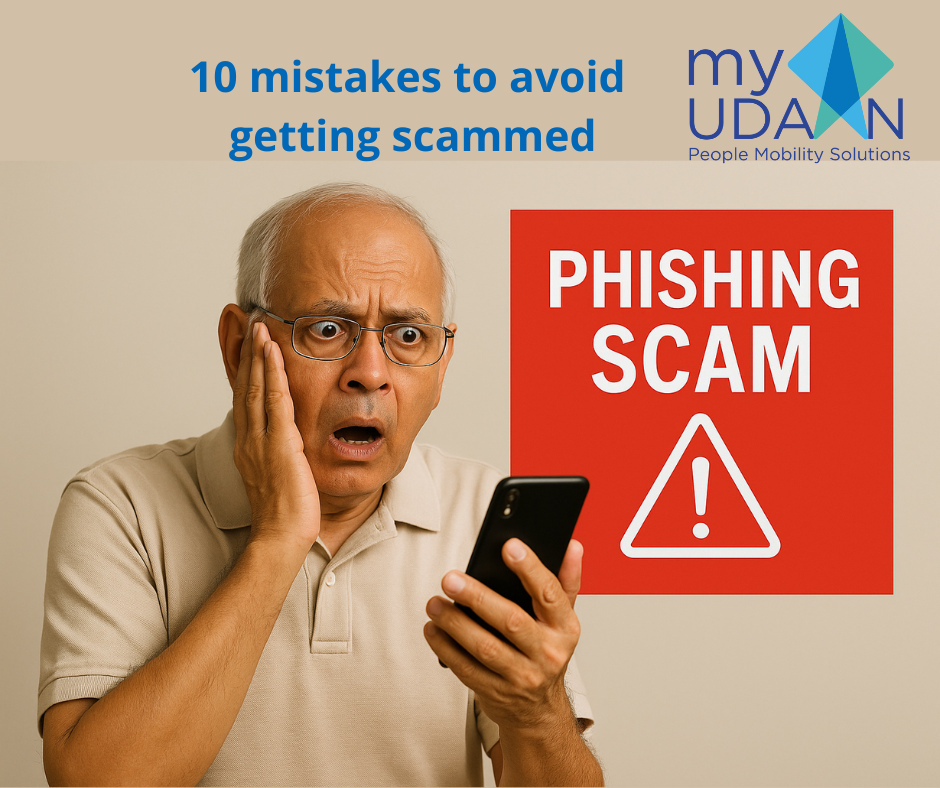
Elders can protect themselves from scams by adopting a strict "Stop, Think, and Verify"
1.Verify Unexpected Contacts
Rule: Never share personal/financial details over calls, emails, or messages.
Example: If “bank staff” call, hang up and dial the official number from the bank’s website.
2. Spot Phishing Emails
Red Flags:
– Urgent threats (“Your account will be locked!”).
– Generic greetings (“Dear Customer”).
– Suspicious links (hover to check URLs).
-Action: Delete and report as spam.
3. Secure Passwords
Do’s**:
– Use strong, unique passwords (e.g., `Sunset@2024!`).
– Enable two-factor authentication (2FA).
– Don’ts: Reuse passwords or write them down.
4. Avoid “Too-Good-To-Be-True” Offers**
– Scams: Fake lottery wins, “free” vacations, or miracle health products.
– Mantra: “If it sounds too good to be true, it probably is.”
5. Use Trusted Websites
– Check:
– Padlock icon (🔒) in the browser bar.
– Website URLs start with `https://` (not `http://`).
– Example: Shop only on Amazon/Flipkart, not unknown sites.
6. Monitor Bank Accounts
– Habit: Review statements weekly for unauthorized transactions.
– Tool: Set up SMS alerts for all transactions.
7. Beware of Tech Support Scams
– Trick: Pop-ups saying “Your computer is infected!”
– Response: Shut down the device and call a trusted tech-savvy contact.
8. Limit Social Media Sharing
– Risk: Scammers use personal info (e.g., pet names) to guess passwords.
– Tip: Adjust privacy settings to “Friends Only.”
9. Educate Continuously
– Resources:
– Free webinars by CyberPeace Foundation(India).
– YouTube tutorials (e.g., “How to spot scams”).
10. Get a Second Opinion
– Rule of Thumb: Before clicking/paying, consult a family member or friend.
1. Received a suspicious message? → Don’t click.
2. Asked for money/passwords? → Hang up.
3. Offer seems unreal? → Google “[Offer] + scam”.